Some links in this article are affiliate links. We may earn a
small commission if you make a purchase through these links —
at no extra cost to you. That keeps the wheels turning.
As an Amazon Associate we earn from qualifying purchases.
The Heart of the Van Life Kitchen
When you build your own van, every single component is a choice. From wiring the 12V system to cutting the hole for the vent fan, you obsess over what gear will be reliable and what will let you down 100 miles from the nearest town. And nowhere is that choice more critical than your cooktop. It’s the difference between a hot meal after a long hike and a sad dinner of cold beans. After years on the road, I’m here to tell you why the humble, classic Portable Camping Stove is still the undisputed champion of the mobile kitchen.
Our top picks
- Portable Power StationCheck price on Amazon
- Portable Camping StoveCheck price on Amazon
- Portable Induction CooktopCheck price on Amazon
Overview
TL;DR Verdict
Yes, the classic butane/propane Portable Camping Stove is absolutely worth it in 2026 and remains the best all-around cooking solution for van life and camping. Its unmatched reliability, simplicity, and independence from your electrical system make it a more practical choice than power-hungry alternatives like the Portable Induction Cooktop for true off-grid freedom.
| Feature | Portable Camping Stove (Butane) | Portable Induction Cooktop |
|---|---|---|
| Best For | Off-grid reliability, budget builds | Campground campers with shore power |
| Power Source | Butane/Propane Canisters | Electricity (120V AC) |
| Key Strength | Works anywhere, no battery drain | No open flame, precise temperature |
| Main Drawback | Requires ventilation, less wind-resistant | Massive power consumption |
How We Evaluated
As a full-time van lifer, I judge gear on what matters on the road. My evaluation focused on:
- Off-Grid Reliability: Can it function for days or weeks without needing a recharge or special conditions? Your stove can’t be a liability.
- Efficiency & Fuel: How much cooking can you get done, and how easy is it to find and store fuel? Space and availability are everything.
- Cooking Performance: Does it provide enough heat to boil water quickly and simmer effectively? A wimpy flame is a frustrating flame.
- Footprint & Simplicity: How much space does it take up, and how foolproof is it to set up and use, especially after a long day?
Hands-On Review: The Classic Workhorse
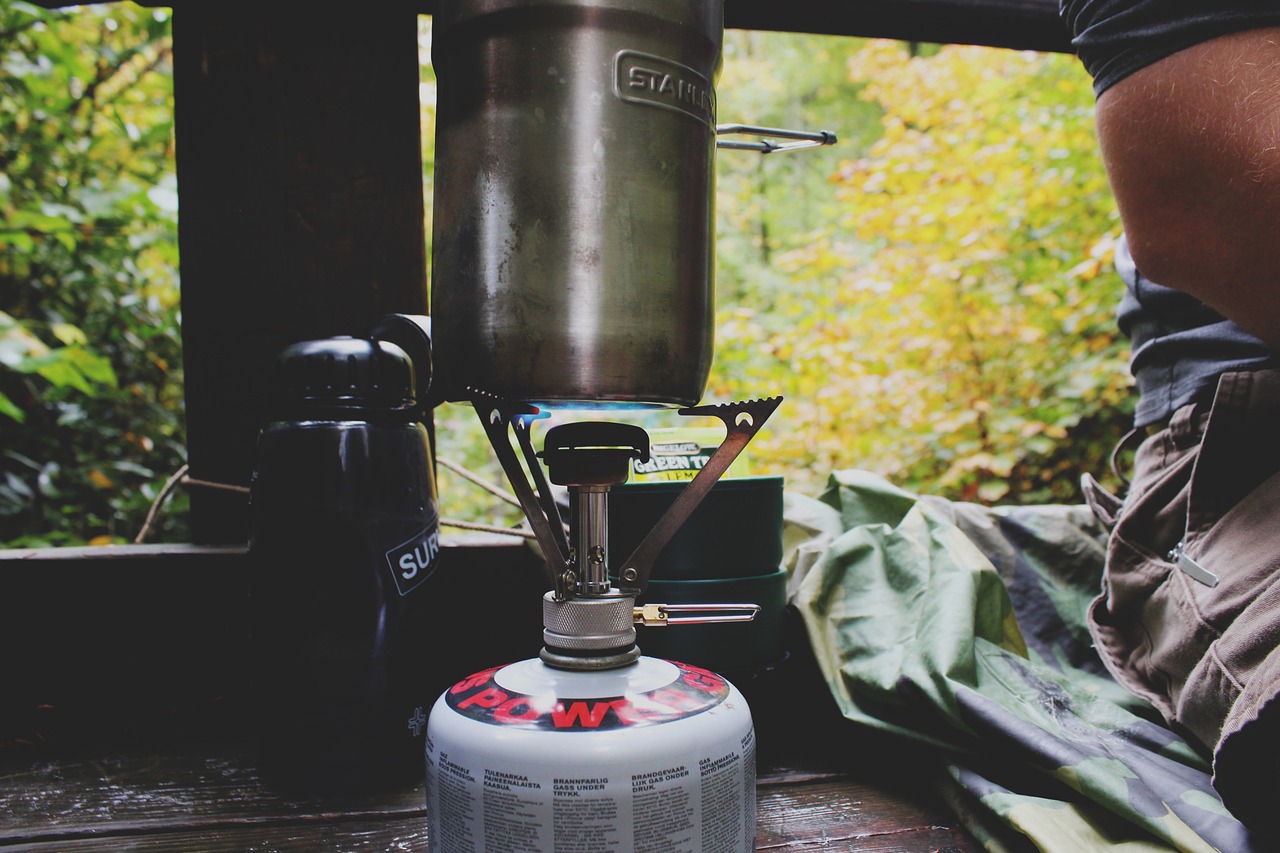
The single-burner butane Portable Camping Stove is an icon for a reason. Its design is brutally simple: a lightweight metal body, a spot for an 8oz butane canister, a dial for flame control, and a piezo igniter. There are no menus, no software updates, and nothing to break that can’t be fixed with a bit of ingenuity. Setup takes literally 10 seconds: open the canister door, align the notch, lock it in, and turn the dial. Click. You have fire.
Performance-wise, it’s fantastic. It boils a liter of water in about 5-6 minutes, and the flame control is surprisingly responsive, allowing for a nice simmer. Its main weakness is wind, which can snuff out the flame or dramatically reduce its efficiency. This is why having the flexibility to cook inside (with a window cracked and a vent fan on!) or outside is key.
In daily van life, its independence is its superpower. While my friends are anxiously checking their battery monitors, I can cook a three-course meal without draining a single amp-hour. Storing a 4-pack of butane canisters takes up minimal space and provides hours of cooking. It just works, every single time.
Alternatives: The Power-Hungry Contender
The main rival is the sleek and modern Portable Induction Cooktop. I’ll admit, the appeal is strong: no open flame, a flat glass surface that’s a dream to clean, and incredible temperature precision. However, its Achilles’ heel is its monstrous power consumption. A typical unit pulls 1500-1800 watts. To put that in perspective, you would need an enormous battery bank and a high-output inverter to run it for even a short time. Even a large Portable Power Station would be drained after cooking just one or two meals. For a DIY builder who carefully sized their electrical system for lights, a fridge, and a fan, adding an induction cooktop is often a non-starter without a complete (and expensive) system overhaul.
The Final Verdict
For the vast majority of van dwellers, weekend campers, and overlanders, the classic Portable Camping Stove is the smarter, more reliable, and more practical choice. It gives you the freedom to cook a great meal anywhere, anytime, without worrying about your power budget. While the Portable Induction Cooktop has its place in RVs with massive electrical systems or at powered campsites, it’s a luxury item that compromises the off-grid self-sufficiency that van life is all about. Stick with the simple, dependable flame.
Frequently Asked Questions (FAQ)
Are portable camping stoves safe to use inside a van?
Yes, but only with adequate ventilation. Always crack a window and run your roof vent fan to exhaust carbon monoxide and moisture. Never leave a stove running unattended.
How long does one 8oz butane canister last?
On medium-high heat, a standard canister will last for about 1.5 to 2 hours of continuous cooking. For the average camper, one canister can easily last for a full weekend of making coffee and meals.
Can I use propane with a stove designed for butane?
Generally, no. Stoves are designed for the specific pressure and nozzle of their intended fuel type. However, many dual-fuel models exist that can connect to either butane canisters or larger propane bottles via an adapter hose.